


Blogs
Unique Nature-Inspired Engagement Rings: A Guide to Botanical Artisan Jewelry
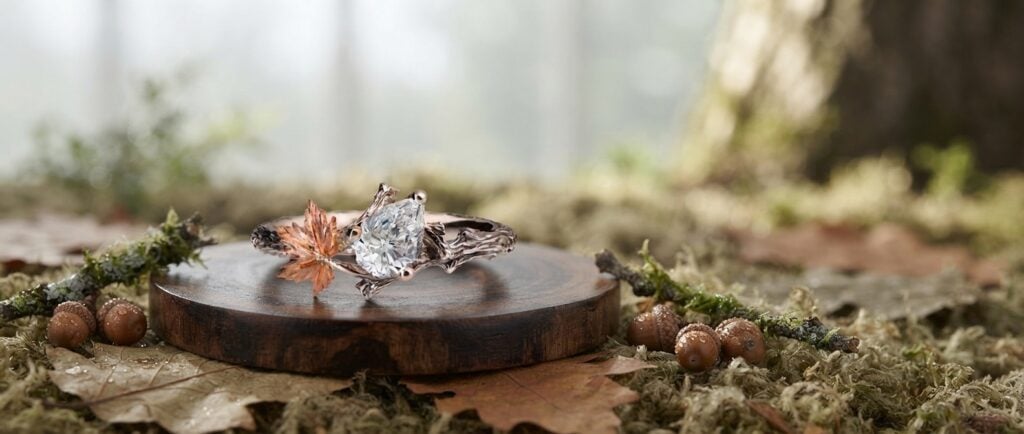
Nature-inspired engagement rings feature organic motifs such as hand-carved leaf bands, twig textures, and floral settings that capture the beauty of the outdoors in precious metals and gemstones. When you are searching for a ring that breaks away from traditional commercial jewelry, botanical designs offer a refreshing celebration of organic asymmetry and tactile artistry. These heirloom-quality pieces allow wearers to carry a subtle, grounding piece of the natural world with them every single day, blending artistic creativity with exceptional fine jewelry craftsmanship.
What Defines Nature-Inspired Engagement Rings?
When searching for unique nature-inspired engagement rings, couples are often drawn away from traditional, ultra-polished high-set solitaires in favor of designs that celebrate the raw, untamed beauty of the natural world. These rings incorporate sculptural elements such as winding vines, delicate floral halos, asymmetrical leaf clusters, and tactile branch details. Rather than striving for absolute geometric perfection, artisan fine jewelry makers embrace subtle irregularities and organic textures that mimic real forest flora. This design philosophy creates a deeply personal piece of jewelry that feels alive, grounded, and intimately connected to nature. Every curve and engraved line tells a unique story, ensuring that no two artisan creations are ever completely identical, which deeply appeals to those who value individuality over mass-produced symmetry.
Popular Botanical Motifs (Leaves, Vines, and Branches)
Botanical fine jewelry relies on a rich vocabulary of organic shapes. Leaf motifs are often sculpted to gently cradle a center stone, creating a soft, protective embrace around the gemstone. Vine bands weave gracefully around the finger, sometimes incorporating small bead-set accent stones that resemble morning dew or budding flowers. For those drawn to rustic yet refined aesthetics, branch-textured bands offer incredible visual interest. A great example of this style is the twig and leaves diamond engagement ring, which translates the raw texture of actual twigs into precious gold or platinum while maintaining a comfortable profile for everyday wear. These botanical elements do more than just decorate the metal; they structurally integrate the gemstone into a living narrative of woodland beauty.
Choosing the Right Gemstone for an Organic Ring
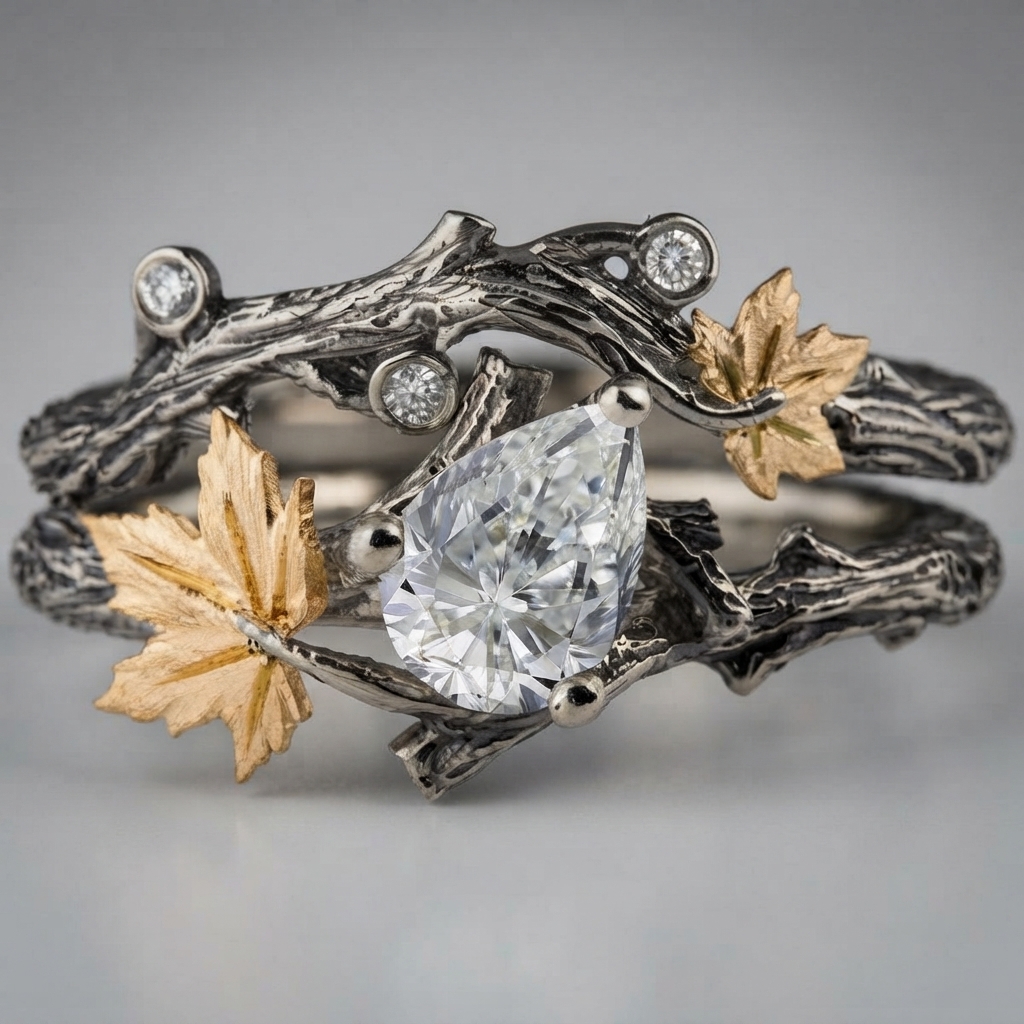
The choice of center stone dramatically influences the overall character of a botanical ring. While traditional brilliant-cut white diamonds remain a timeless choice, many individuals opting for organic settings choose alternative stones that enhance the natural theme. Salt-and-pepper diamonds, raw or rustic diamonds, earthy colored gemstones, and Montana sapphires pair exceptionally well with earthy metalwork. For an even more dynamic botanical look, pairing intricate band work with leaf accents can be seen in the twig and maple leaf engagement ring diamond, where detailed foliage frames the stone to create a harmonious woodland composition. Selecting a gemstone with unique inclusions or warm tones emphasizes the artisanal, one-of-a-kind nature of organic jewelry, allowing you to match the visual weight of the stone with the intricate detailing of the metal setting.
Ensuring Durability in Delicate Nature Designs
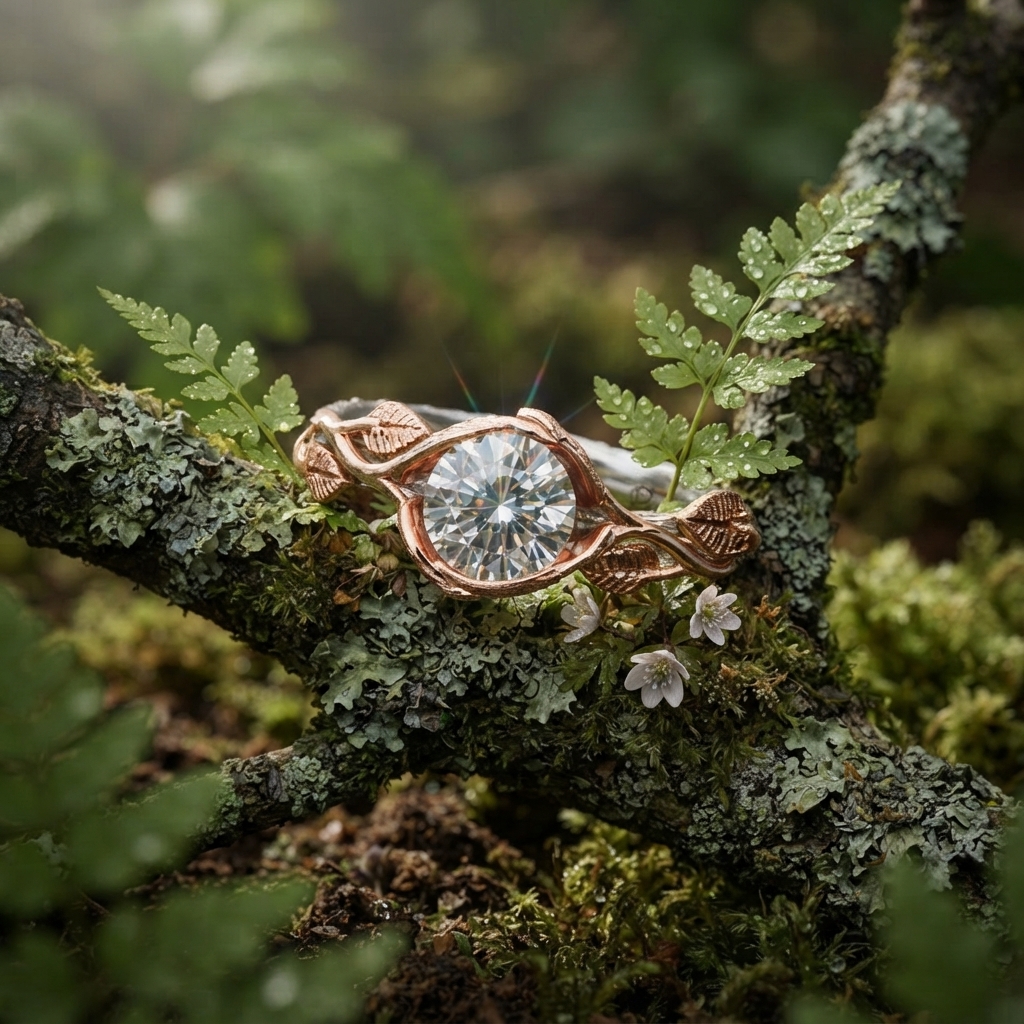
A common concern among buyers exploring organic fine jewelry is whether delicate elements like thin vines, leaf prongs, or engraved bark textures will withstand decades of daily wear. High-quality craftsmanship addresses this by balancing artistic delicacy with structural reinforcement. Artisans carefully calculate the thickness of the band and ensure that prongs securely anchor the center stone without relying solely on fragile surface details for structural integrity. Choosing durable precious metals—such as 18k gold or platinum—also ensures that fine milgrain texturing and sculptural leaf details retain their crisp definition over years of continuous use. Proper maintenance, professional cleaning, and thoughtful daily wear habits further guarantee that your intricate botanical ring remains as sturdy and enduring as traditional classic styles.
How to Pair a Nature-Inspired Ring with a Wedding Band
Because organic and botanical rings often feature asymmetrical silhouettes, twisting branch profiles, or protruding leaf clusters, pairing them with a traditional straight wedding band can sometimes leave an awkward gap. Planning for a wedding band ahead of time simplifies this process significantly. Many couples opt for contoured or curved wedding bands designed to nestle snugly against the organic curves of the engagement ring without scraping or damaging the delicate detailing. Alternatively, an open gap band or a delicate textured band featuring matching leaf or vine motifs can create a cohesive, complementary stack that honors the natural theme from every single angle. Consulting with an artisan designer ensures that your wedding band and engagement ring fit together seamlessly as a unified work of art.
Embrace Artisan Elegance
Selecting a non-traditional ring is a wonderful way to showcase personal style and a deep appreciation for organic artistry. By prioritizing thoughtful design, durable precious metals, and expert hand-crafting, your ring will remain a cherished symbol for a lifetime. To discover more distinctive styles, explore the handmade engagement ring collection and find an artisan design that speaks to your story.
Frequently Asked Questions
Are twig and leaf engagement rings durable enough for everyday wear?
Yes, when crafted by skilled artisans using robust precious metals like 18k gold or platinum, nature-inspired rings are fully engineered for daily wear. Jewelers reinforce structural areas while keeping delicate botanical details secure and comfortable. Proper care and regular inspections by a professional jeweler will ensure your ring withstands decades of active use.
How do I find a wedding band that fits against a botanical engagement ring?
Curved or contoured wedding bands are specifically shaped to sit flush against asymmetrical or organic engagement ring settings. You can also pair them with companion bands that share matching leaf or twig textures. Working closely with your jewelry designer allows for custom contouring that matches the exact topography of your engagement ring.
Can nature-inspired rings be customized with different gemstones?
Absolutely. Many artisan designs can be customized with a variety of center stones, including traditional diamonds, lab-grown diamonds, salt-and-pepper diamonds, and colorful gemstones that fit your personal aesthetic. Customization ensures that your botanical ring reflects your exact color preferences and ethical priorities.
What metal types work best for organic ring designs?
Yellow gold, rose gold, white gold, and platinum all work wonderfully. Warm gold tones often enhance the earthy feel of wooden or branch textures, while platinum offers exceptional durability for intricate milgrain and delicate prongs. Your choice depends on your skin tone, preferred patina, and desired level of structural hardness.
What is milgrain detailing on a nature-inspired ring?
Milgrain refers to the tiny, raised metal beads often bordering the edges of a setting or band. In botanical designs, it adds a vintage, textured elegance reminiscent of organic patterns found in nature. This careful hand-finishing technique adds depth and tactile interest to the overall silhouette.
How should I clean and maintain a detailed botanical engagement ring?
Botanical rings with intricate leaf carvings and deep textures require gentle cleaning to remove everyday oils without damaging delicate prongs. Use warm soapy water and a soft-bristled brush to gently clean around the stones and crevices. Avoid harsh chemical dips, and take your ring to a professional jeweler periodically for a deep ultrasonic cleaning and structural check.
Recommended products


Deep Forest
From: $2,500


Deep Forest
From: $6,070